
Ghost Rivers – Story of the Lost Cubs of the Kalahari Desert
This is the story of the Kalahari’s Ghost Rivers, and the fight for survival of a lion pride after losing their cubs. The desert lions face not only the danger of extreme elements, but sometimes the greatest threat to their existence lurks behind the veil of the pride. The story of Ghost Rivers – Lost Cubs of the Kalahari Desert is an article written by Armand Grobler after spending nearly a month following the pride intimately as news of their den spread. It is a story of heartbreak, but also a reminder that in Africa the greatest victories and tragedies are merely chapters in its infinite story. Tribulation builds resilience, and resilience over time forges legacy – what true kings are made of.
Our world is shaped by stories. Some speak of grief and loss, while others celebrate the triumph of perseverance and the privilege of breakthrough. There is great treasure in recognising the importance of stories and the value they bring to our lives. Stories have the power to inspire generations, to bring hope to the weary, and to stir emotion in even the most barren hearts. They can dismantle strongholds and, at the same time, build them anew. Stories can motivate individuals and communities, breathe life into dreams and in some cases, help preserve life.
Stories hold the power to protect an ecosystem or perhaps even a planet.
Hidden behind the veil of an unforgiving wilderness lies the quiet narrative of our planet’s oldest Transfrontier Park. Known for its blistering summer heat and bitter winter cold, the tale of the Kgalagadi is one of endurance, but also of unexpected grace. Over the past year while working on my latest book, I had the privilege of documenting the unfolding lives of lion prides, leopard families, and cheetah coalitions living within the Kgalagadi. I witnessed the rise and fall of dynasties, each locked in a relentless struggle for survival against overwhelming odds. There were moments of small triumph, but also the weight of bitter loss, as the harsh talons of the wild tightened their grip. Each of these stories weaves together into a greater narrative, a story of wonder beneath the vast Kalahari skies.
The ancient, dried-up rivers that cut through the Kgalagadi can seem empty and lifeless at first glance. First-time visitors often struggle to consider the vast silence and desolation with the promise of a flourishing wildlife destination, yet these ghost rivers are anything but barren. Each night, thousands of creatures move across the dunes, scribbling their stories into the sand and by morning, the dusty roads are filled with their tracks, a quiet reminder of life etched into an ocean of sand.
As the first light of dawn breaks through the darkness, the night reveals its hidden secrets. Claw marks, hoofprints and drag lines speak of the hunt – an ancient dance between predator and prey. To study these signs is much like reading a newspaper, and on one particular morning, the headline told an unusual story – one that would become one of the Kgalagadi’s lingering mysteries.
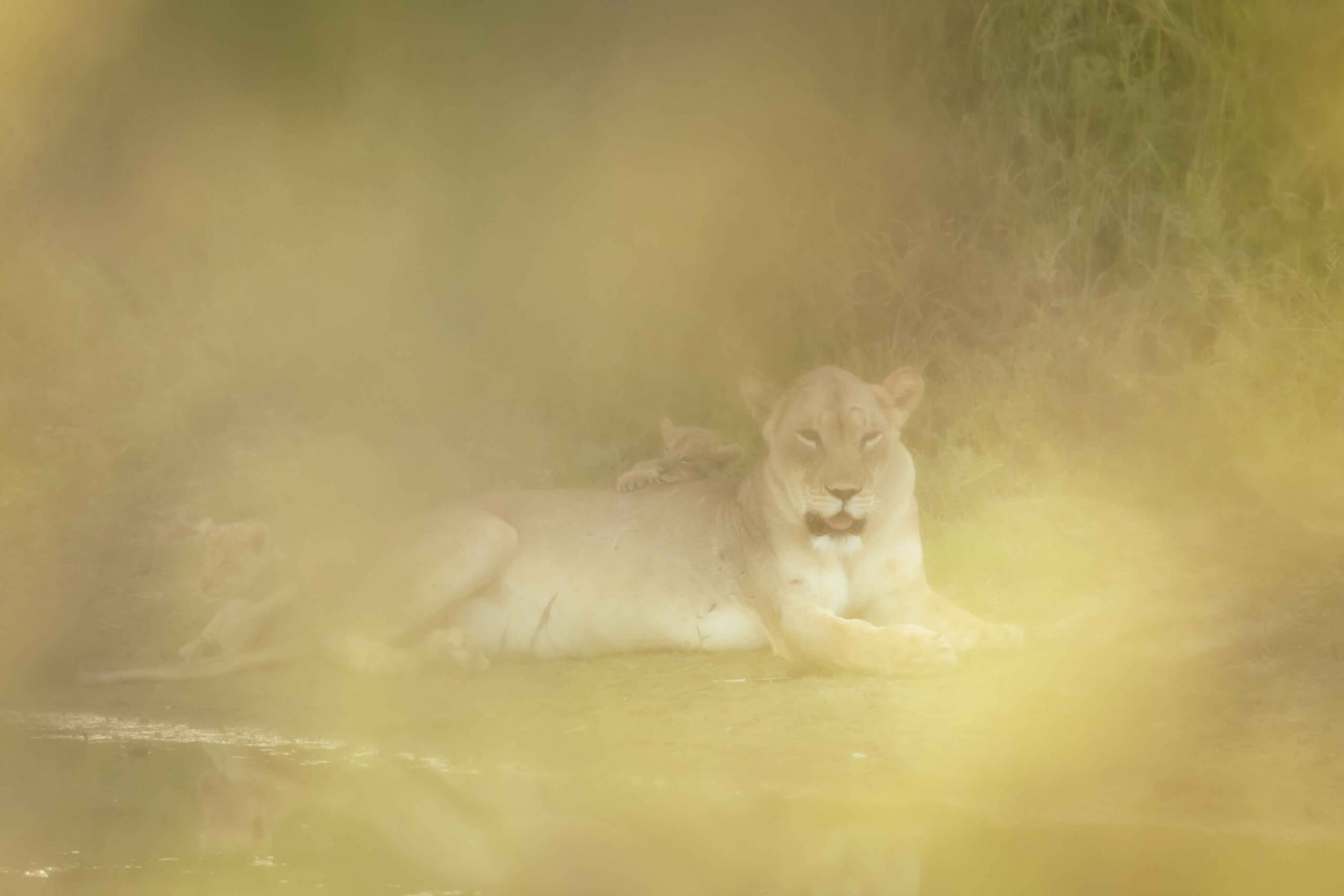
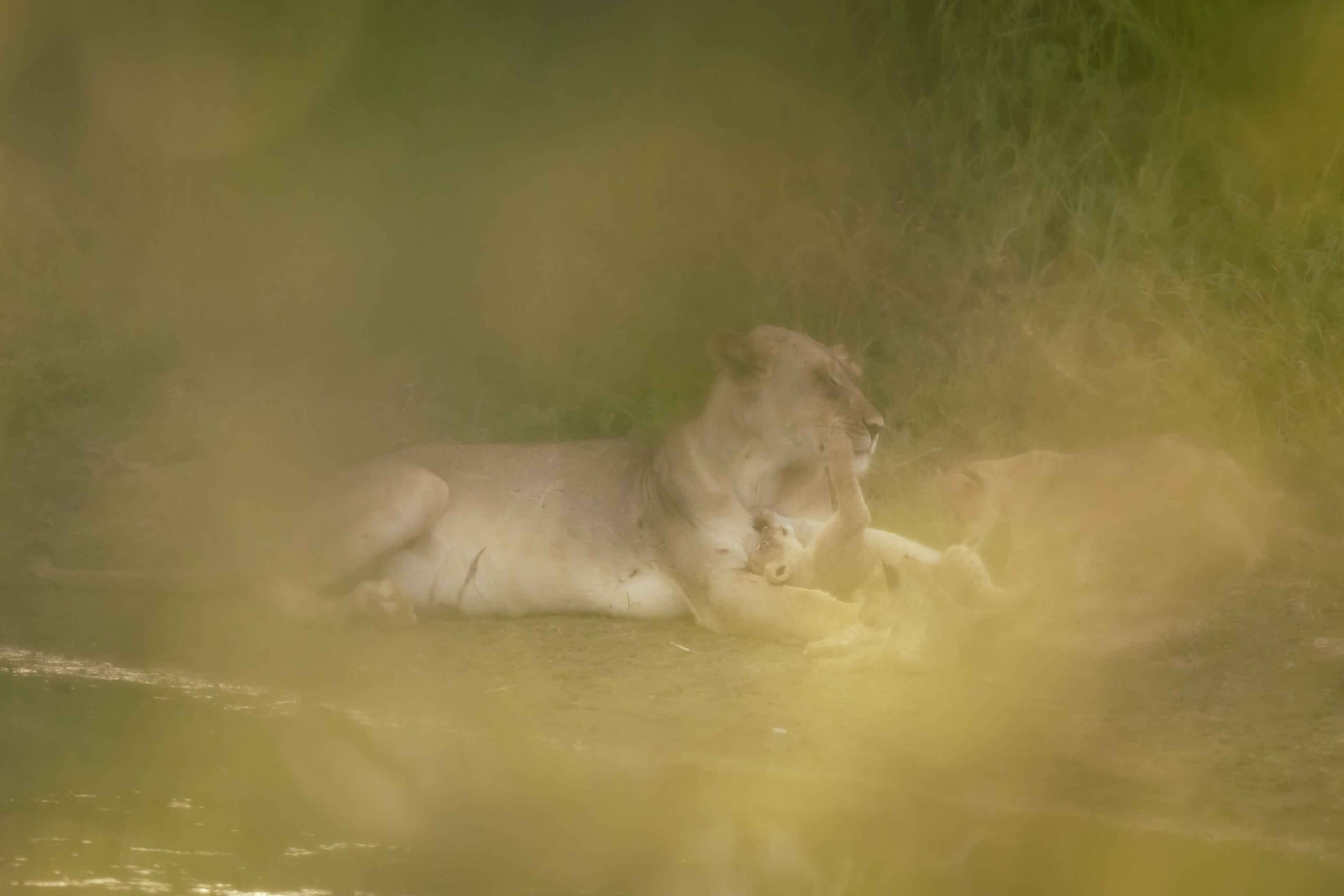
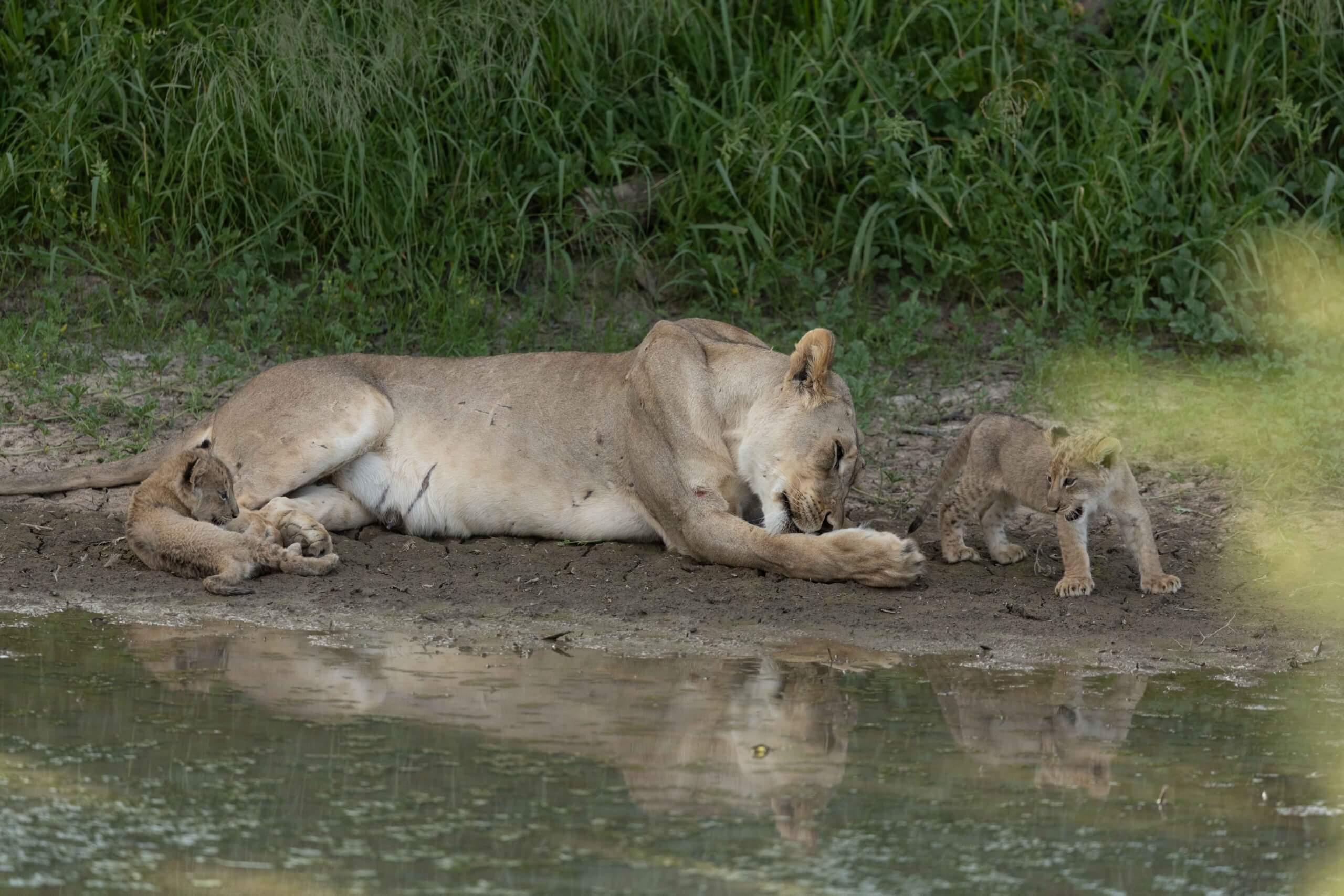
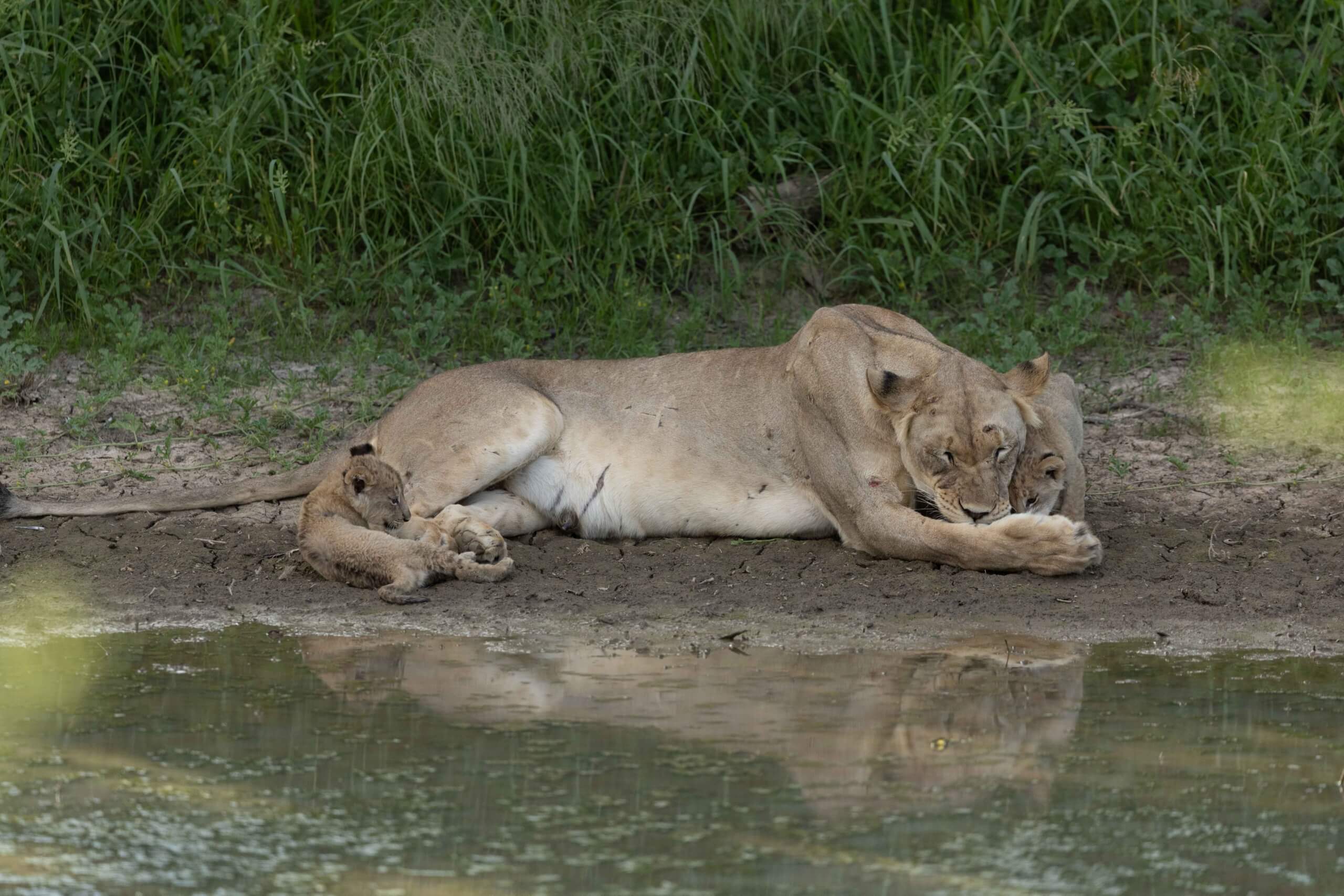
In the middle of the road stood the delicate pugmark of a tiny lion cub. Although we had been given a general area for the den, it took hours of slow searching to find its location. That single print confirmed we were close and our patience was rewarded later that afternoon when a lioness appeared from behind the glowing orange dunes, followed by three small, unsteady cubs.
They could not have been more than a month old, their legs still unsure as they followed their mother toward the water. Few sightings compare to the privilege of sitting quietly with a lioness and her young. As the sun dipped and the desert air cooled, the cubs began to play; tumbling, stumbling and discovering the world under their mother’s watchful eye. No other creature is afforded such luxurious access to a den, most that venture too close are met with teeth, claws and uncompromising resolve!
Yet there we were, silent witnesses to one of nature’s most intimate, tender moments and as darkness settled, we left them to the mercy of night. Dawn brought the promise of excitement, the anticipation as invigorating as the first sip of freshly brewed coffee. But when we arrived, the mood suddenly changed.
A large black-maned male [lion] lay stretched across the road, resting after a night’s lengthy patrol. Nearby, a lioness lingered close to him, her maternal intentions unmistakable, but the mother with cubs was nowhere to be seen. Time passed as the excitement slowly evaporated, replaced by a growing unease before the brutality of life was discovered with the lifeless body of a tiny cub. The mother stood over it, pawing gently while calling softly as if urging it to rise, and when it didn’t move, she lifted it carefully and carried it toward cover. Her low, mournful calls shattered the silence of the riverbed with thunderous power.
Far out across the open river, two young nomadic males suddenly appeared sending the distressed lioness for cover as she deserted her remaining cub still exposed to the approaching danger. The tiny survivor pressed itself against the body of its dead sibling, its soft calls echoing across the empty river, to the depths of our soul. The young males advanced with purpose as the grim stalk began.
Suddenly, the massive figure of the black-maned male had risen and walked calmly into their path, seemingly unaware of the unfolding drama. The effect was immediate as the two nomads halted, dropped low in submission, and retreated to the safety of the dunes. The large male moved on without a glance, disappearing beneath the shade of a camel thorn tree to continue his rest, and eventually the mother returned to carry her remaining cub to safety beyond the dunes.
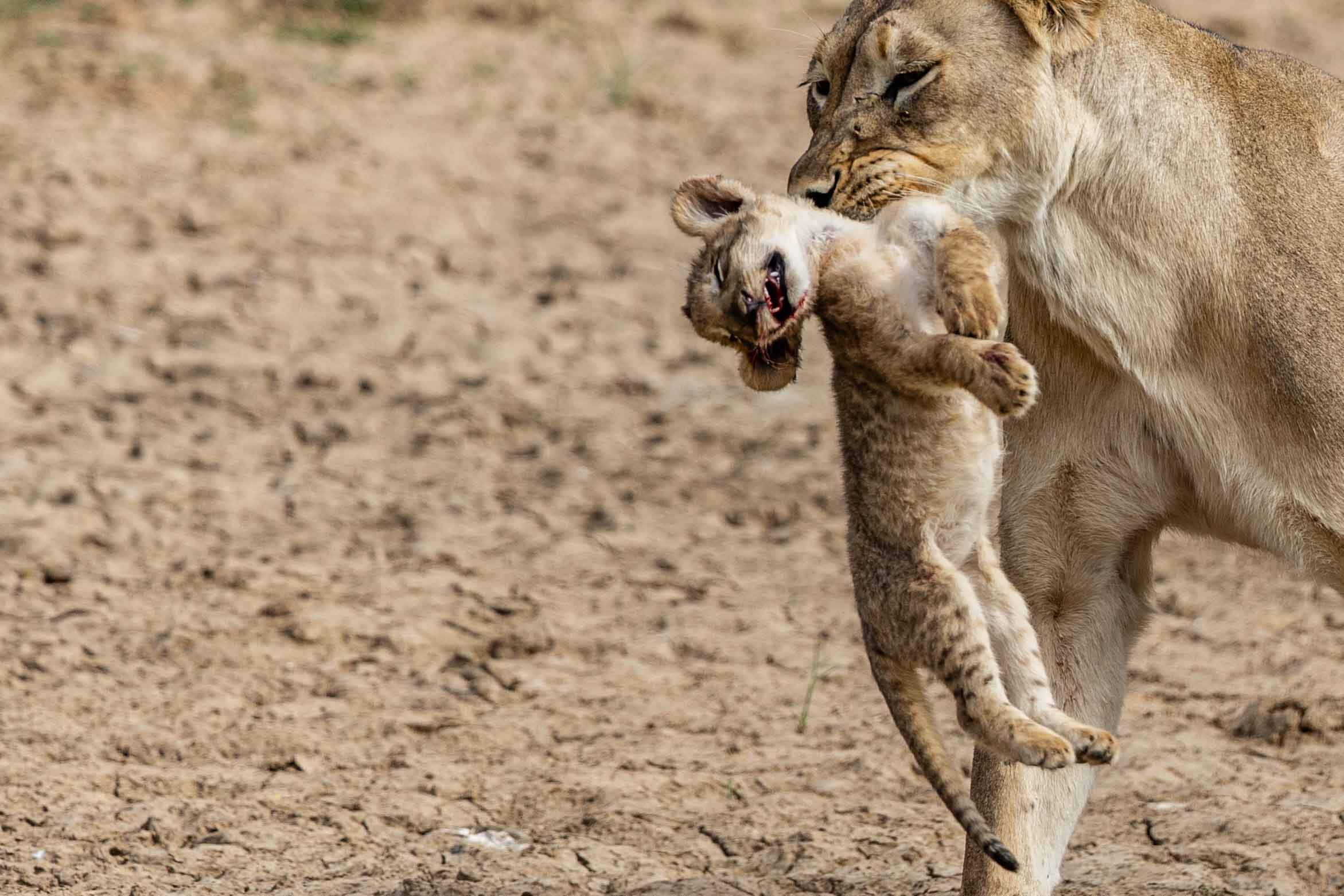
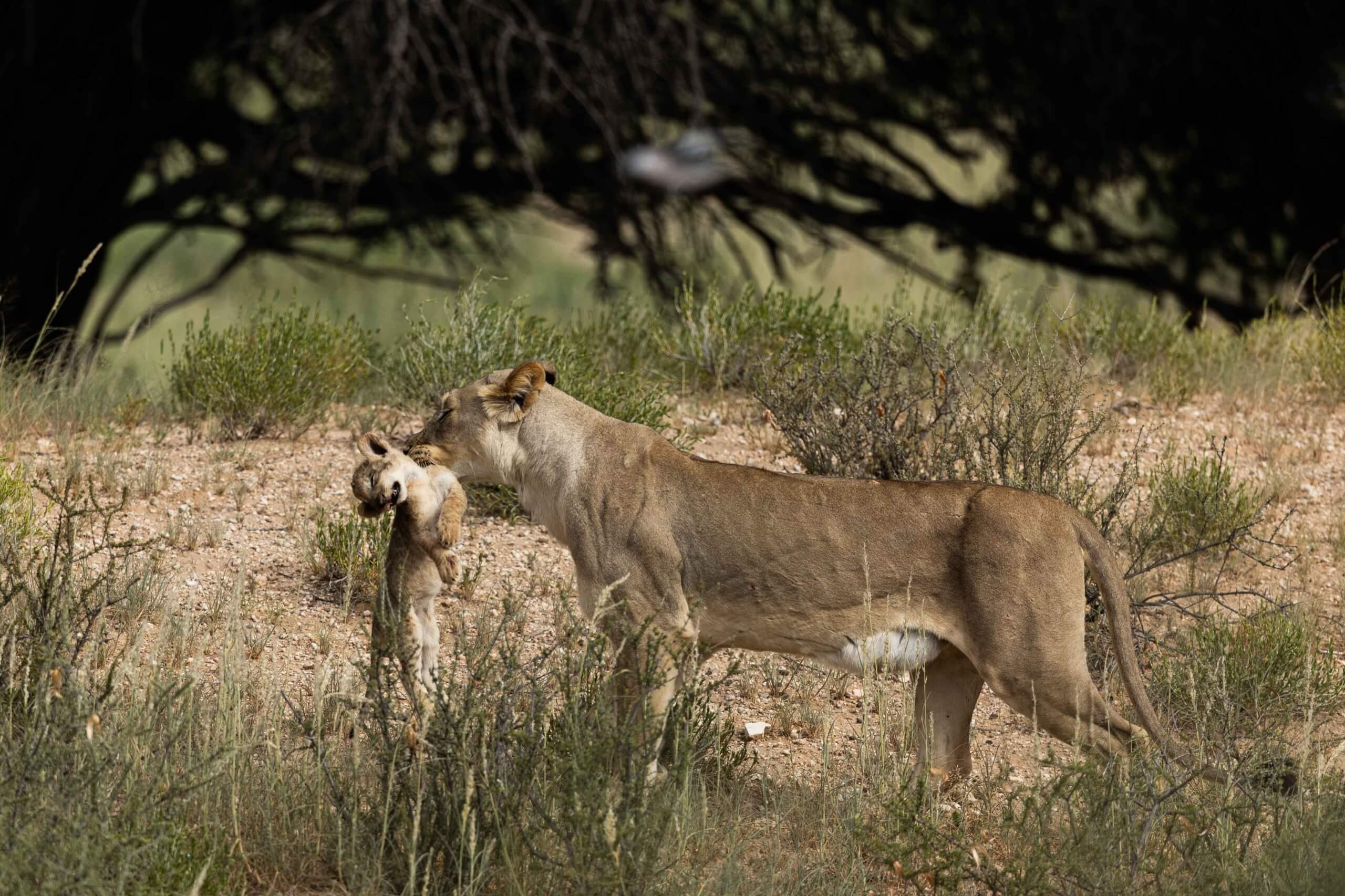
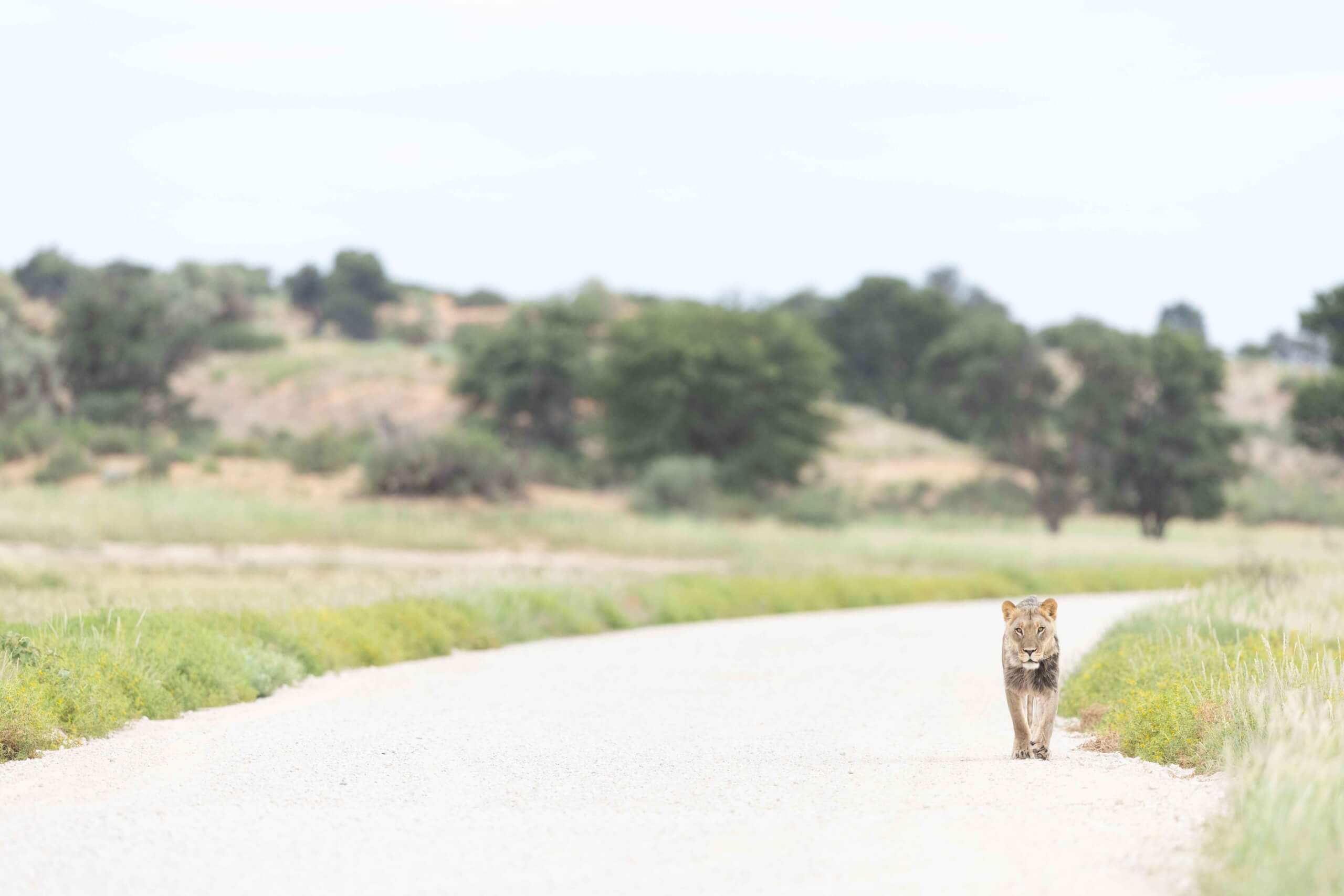
Two weeks later, she walked the riverbed alone, her mammary glands had dried, and with the loss of her final cub, her attention had shifted back to the pride. What happened to the litter remains unknown. Was it the dominant male? A related lioness? A passing hyena, or one of the nomadic males? Their story remains a secret hidden beneath the sands.
In the Kgalagadi answers are rarely certain; perhaps that is part of its magical allure to the modern explorer. For every story we witness, many more unfold unseen. Lives begin and end between the vast dunes as stories written briefly in the sand before the wind erases all evidence of existence. Together, these stories weave the fabric of the Kgalagadi’s ancient character. They beckon photographers, filmmakers and modern-day explorers to not merely observe, but enter the frame – to follow the tracks and add their own chapter to a story that is never truly finished.
Article by Armand Grobler
Camera Gear Partners

Rhulani Photo and Film have proudly partnered as Pathfinder Ambassadors with f-stop Gear as industry leading camera bag suppliers.
Publishing Partners
 Proudly Partnered with South Africa’s Premier Wildlife and Boutique Styled Coffee-Table Book Publishers.
Partners in Camera Support

Proudly Partnered with Gimpro – the industry leading camera support gear for your vehicle or safari!

 Rhulani Photo and Film