
Wildlife Camera Trapping: Into the Hidden World of Wildlife
Wildlife camera trapping has become an increasingly popular technique around the globe, both as a creative tool for photographers and as a powerful method of collecting valuable wildlife data. Camera traps range from basic R3,000 setups capable of capturing simple, low-resolution images to professional systems costing upwards of R20,000.
During my work on Project Eden, I made use of professional-grade camera traps that allowed me to venture deep into the hidden world of wildlife – a world where photographers cannot always go – and capture unique images that tell a very different story. However, wildlife camera trapping is also a subject of considerable debate. Some photographers believe it is unethical to publish images when the photographer did not personally press the shutter. But, as we will explore throughout this article, the effort required to create a professional camera-trap image is far more involved than simply placing a camera in the bush and walking away. Planning the composition, selecting the location, positioning the equipment, controlling the lighting and ultimately executing the image can be an incredibly complex process. A successful camera-trap photograph is often the result of careful planning, patience and considerable technical skill.
In this article, we will explore the benefits of wildlife camera trapping, the challenges involved, and how this unique approach to photography can tell stories that conventional cameras often cannot. I will share some of the techniques and secrets that helped me create an extraordinary publication combining traditional wildlife photography with professional camera-trapping systems, blending both techniques to tell a greater story. I will also reveal some of the equipment I used, much of which I have kept relatively secret and ‘close to the chest’ until now, as well as taking you through the planning process and sharing how I recommend approaching wildlife camera trapping.
What Is a Camera Trap?
Simply put, a wildlife camera trap is a remotely triggered camera, operated by a sensor that detects movement, heat, or both – or remote trigger. While the concept may sound relatively simple, professional wildlife camera trapping systems can be surprisingly complex. In 2024, I purchased a Camtraptions system from the United Kingdom which included two flash systems, a housing for the camera body, remote triggers, a sensor and wireless connection receivers. Understanding how all these individual components worked together proved to be one of my first major challenges as a single misplaced insert or incorrectly connected component could affect the entire system. I made notes and took photographs to help me remember the intricate details, but even with these references, it took considerable practice to become comfortable setting everything up correctly and consistently.
Setting up a camera trap of this level typically took me between one and two hours altogether (start to finish). The most time-consuming part was positioning the flash systems at a distance where they would not disturb the animals, while still providing enough power to properly illuminate the subject which involved a great deal of repeated trial and error. Because much of my camera-trap photography was conducted at night, getting the system correctly positioned and exposed often meant working long after dark and this added another dimension to the challenge when predators and other dangerous game were moving through the surrounding area. The sensor is one of the most important components when building a wildlife camera trapping system and the Camtraptions sensors I used operate using infrared technology which can be configured to work during the day, at night, or across both periods.
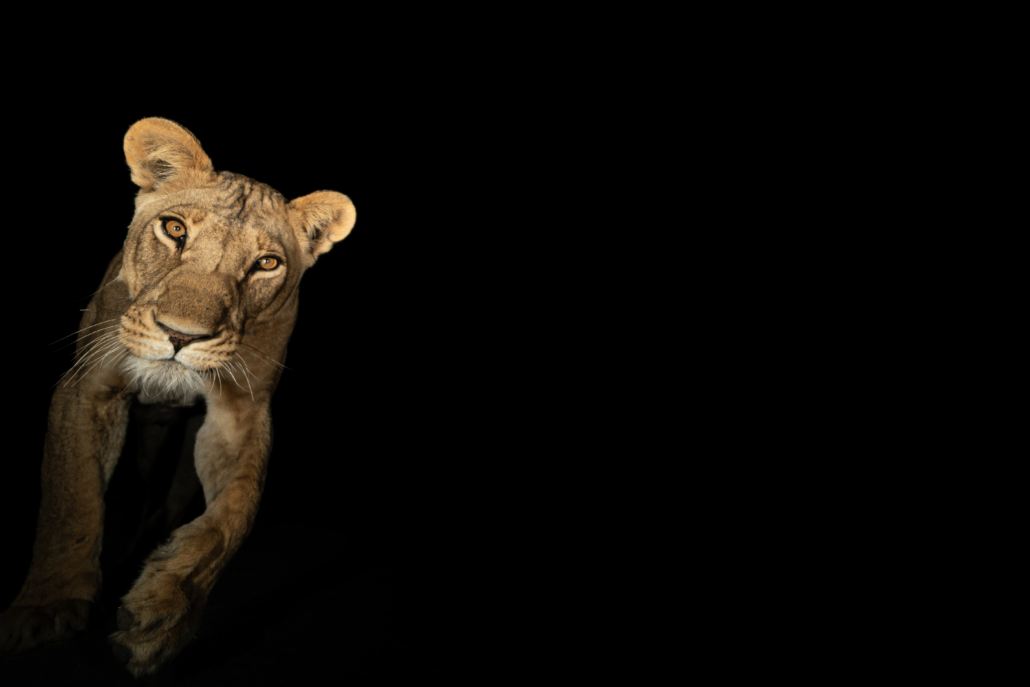
For my own work, I generally configured the system to operate in extremely dark conditions, triggering only when ambient light levels dropped to their lowest as this not only suited the nocturnal subjects I was photographing, but also helped extend battery life.
Why Are Camera Traps So Valuable?
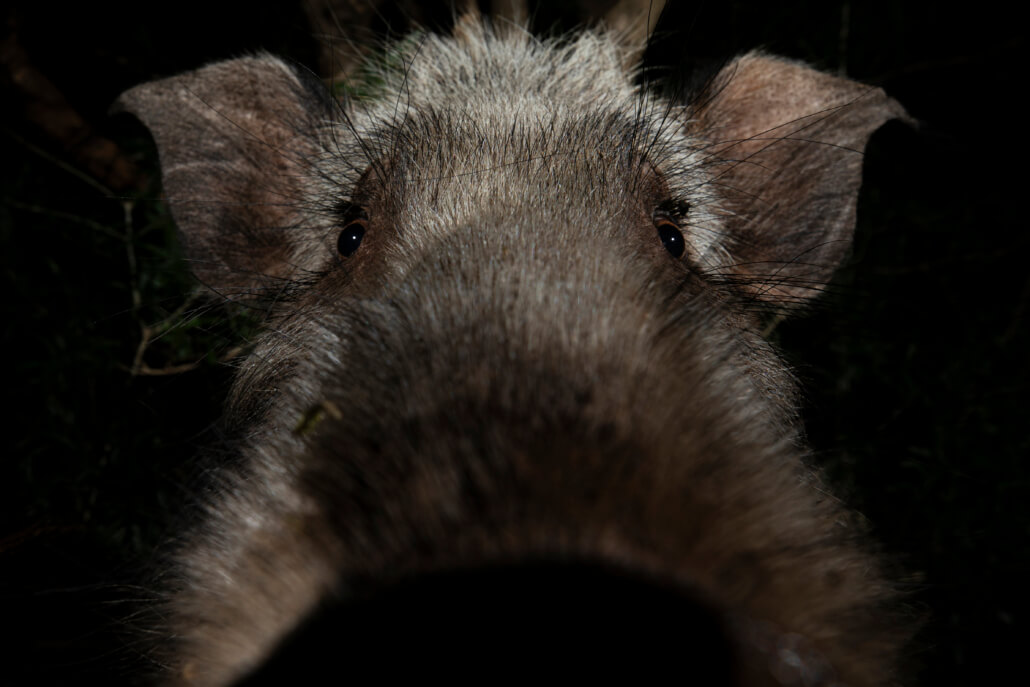
Utilizing wildlife camera trapping allows photographers and researchers a rare glimpse into the world of animals who generally avoid human interaction. Some animals are strictly nocturnal, while others are simply masters of avoiding detection. Although some of the data I collected during my projects was used for research purposes, much of my camera-trap photography was driven by a desire to capture a world that remains largely unseen by humans and conventional cameras. This allows us to capture, observe, study and document species that can be extremely difficult to find with an example being the bush pig, which I was fortunate enough to capture on several occasions. Camera traps can also reveal fascinating insights into animal behavior, particularly when positioned near den sites, waterholes or kills. During my work on Project Eden, I strategically placed several camera traps near water sources and along game trails that I knew led to permanent waterholes and were regularly frequented by wildlife.
The value of wildlife camera trapping extends far beyond simple photography. Camera trapping has become a critical tool for conservation, providing researchers with information about wildlife populations, individual movements and the way animals interact with their environment and they can even be used to help detect and combat poaching. For example, a camera trap might photograph a female leopard in one part of a reserve and then capture the same individual several days later in an entirely different area. By identifying individual animals and recording where and when they are photographed, researchers can begin to understand their movements and what may influence them – including the presence of other individuals, such as another female or a male leopard.
They may also reveal species that were previously unknown or thought to be absent from an area. Photographer Will Burrard-Lucas famously used camera traps to capture and document a black leopard in Kenya’s Laikipia Wilderness. While the camera traps were used primarily for research, they simultaneously produced extraordinary images that helped inspire further conservation-focused storytelling, including his extraordinary book ‘The Black Leopard’. This brings me to my own use of wildlife camera traps.
During Project Eden (2022 – 2025), I was able to photograph several predominantly nocturnal and extremely shy species including hyena, bush pig and porcupine. These animals are often overlooked, and in some parts of Africa they are regarded as vermin and consequently persecuted or shot. For me, this is where wildlife camera trapping becomes more than simply another photographic technique, providing an opportunity to showcase the beauty of species that are rarely seen and often misunderstood. Photography and filmmaking have the ability to change the way people perceive the natural world and by bringing these lesser-known animals into people’s homes through books, films and other productions, we can create awareness and, ultimately, encourage people to care about their survival. Because how can we expect people to protect a species if they don’t even know it exists?
The Art of Wildlife Camera Trapping
Getting the perfect shot with a standard camera is difficult. Getting the perfect shot with a camera trap is difficult on an entirely different level. In addition to setting the camera correctly, the planning phase requires thorough research and intricate preparation, often taking weeks, months or even years to execute. As mentioned above, I set up my camera traps with a primary goal to capture rare and elusive species that are often overlooked by people. I first had to conduct detailed research to determine which areas were abundant with the species I was targeting and then reached out to locals who could advise me on where they believed the camera traps would be most effective. Regularly used game trails and waterholes were obvious targets. Despite this preparation, however, my camera traps often spent months capturing nothing more than a strong breeze.
Once I had established a suitable location, I had to determine the best potential camera settings. I was targeting a difficult species that was predominantly nocturnal, so I set the sensor to trigger at night and used a powerful flash positioned some distance from the camera. This helped prevent the flash from deterring or influencing the animal while still producing an evenly exposed image that told a story. Fortunately, a subject like bush pigs can be curious animals, and on several occasions they approached the camera to investigate the strange object. Unfortunately, the first time this happened, I was not prepared for such a close-up image and had to readjust the focal length of the lens to capture the composition I wanted. This was particularly challenging because the lens had to be set to manual focus, meaning that I had to determine the shooting range and style in advance so I sacrificed many conventional opportunities for potentially exceptional images. A wider focal length may provide a greater chance of capturing an animal within the frame, while a longer focal length can produce a more intimate and powerful image, but only if the animal approaches the camera at precisely the right distance.
It is also important to consider the relationship between the shutter speed and the sensor. If the shutter remains open for more than ten seconds, the sensor must be programmed to trigger only at night as an open shutter pointing directly at the sun for that length of time can cause damage to the camera sensor. Trigger sensitivity is equally important. You do not want the camera firing repeatedly at false subjects, such as a piece of grass moving in the breeze while at the same time, the sensitivity must be high enough to detect the intended animal, even when it approaches cautiously or moves through the frame quickly. Getting the settings right takes time and once they have been established, waiting for the right subject and the right photograph requires even greater patience. A camera trap may remain in place for months before producing a single meaningful image, and even then, the result may not be what you envisioned.
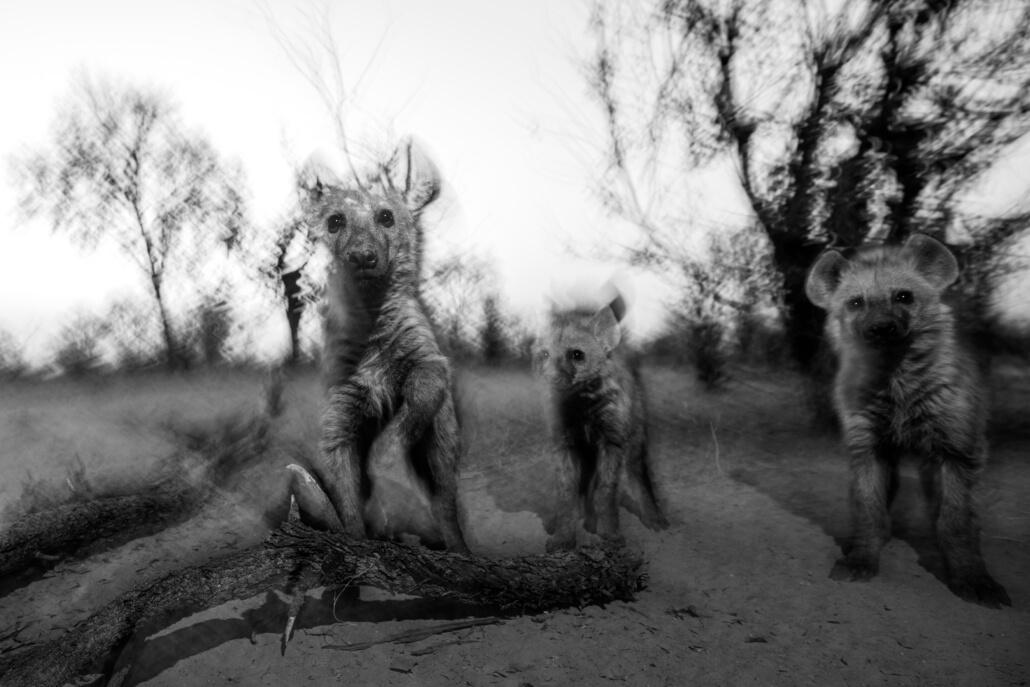
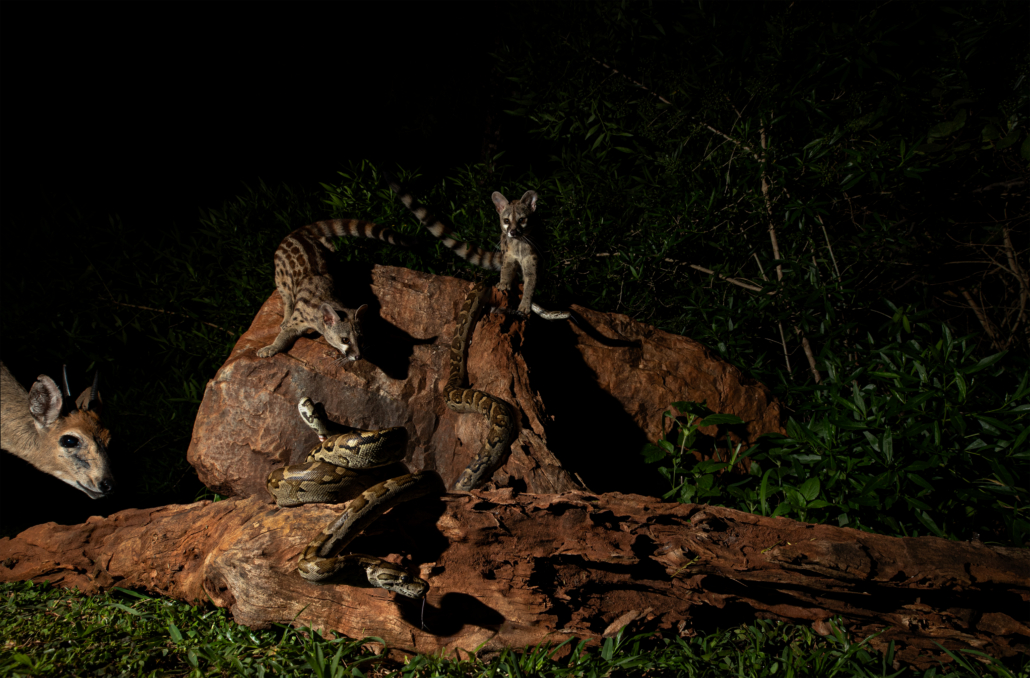
This image was composed by 5 seperate images stacked into a single file. The camera trap was set up for the duration of 12 hours to fire at night using an infra red sensor, and the results were altered in Adobe Photoshop.

Technical Challenges
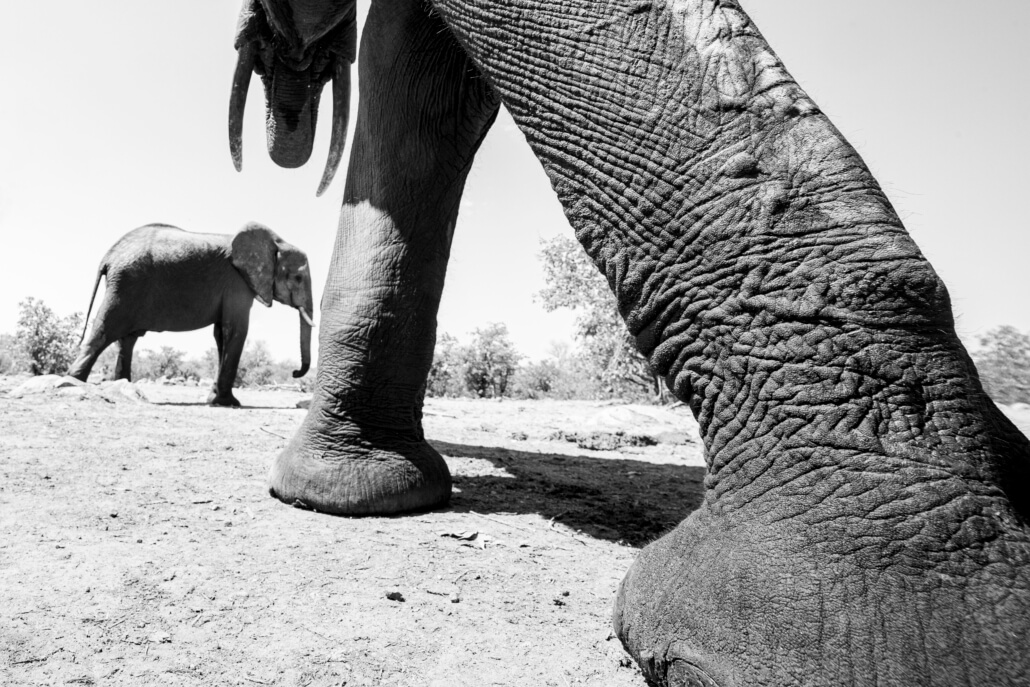
Getting everything right in-camera is a serious challenge when using professional-grade equipment such as Camtraptions, where positioning the sensor, flash and camera correctly is one thing, but then you have the elements to contend with as well. Something as simple as humidity can ruin an otherwise perfect image and on multiple occasions, I captured what appeared to be the perfect photograph in terms of composition and camera settings, only to discover that high humidity had obscured the image. Rain, extreme heat and strong winds can also have a significant impact on camera trap photography. Batteries can fail, camera systems can overheat – particularly mirrorless systems, and even worse, your equipment can be knocked over by a passing elephant before being drenched by a sudden storm – yes, that has happened. Then there are the animals themselves that you have to consider.
Theft isn’t only a human problem when working with camera traps; I have had baboons carry equipment several hundred meters before eventually abandoning it when they lost interest in discovering what was hidden inside. I have had wires chewed by rodents, protective units destroyed by hyenas and even camera casings carried away by wild dogs. I have experienced so many instances of animals interfering with my equipment that I am now seriously considering setting up a secondary camera trap purely to document what happens to the equipment behind the scenes! These challenges are precisely what make wildlife camera trapping such a demanding yet rewarding form of photography. The final image may appear effortless, but behind it lies extensive research, careful planning, technical precision and an extraordinary amount of patience.
A Technique Worth Celebrating
People who criticize wildlife camera trapping sometimes underestimate the amount of skill and preparation required to produce a successful image. Until you have attempted to plan, position, configure and maintain a professional camera-trap system in the wild, it is easy to assume that the process is simply a matter of leaving a camera behind and waiting. It is anything but simple. Wildlife camera trapping has an important role to play in nature conservation, both through the collection of valuable data and through its ability to showcase some of our planet’s rarest and most elusive creatures in powerful photographic projects and publications.
Most importantly, wildlife camera traps allow us to enter a hidden world – a place that exists long after the safari vehicle has disappeared and the human presence has faded away. They reveal behaviors, species and moments that conventional photography may never capture. For that reason, wildlife camera trapping should not simply be viewed as another way of taking a photograph, but as a technique that deserves to be celebrated for the creativity, planning, technical skill and patience required to make it work.
If you would like to learn more about wildlife camera trapping, contact us at info@rhulaniphotofilm.com for tips and advice on how you can achieve something similar.

My Camera Trap Equipment
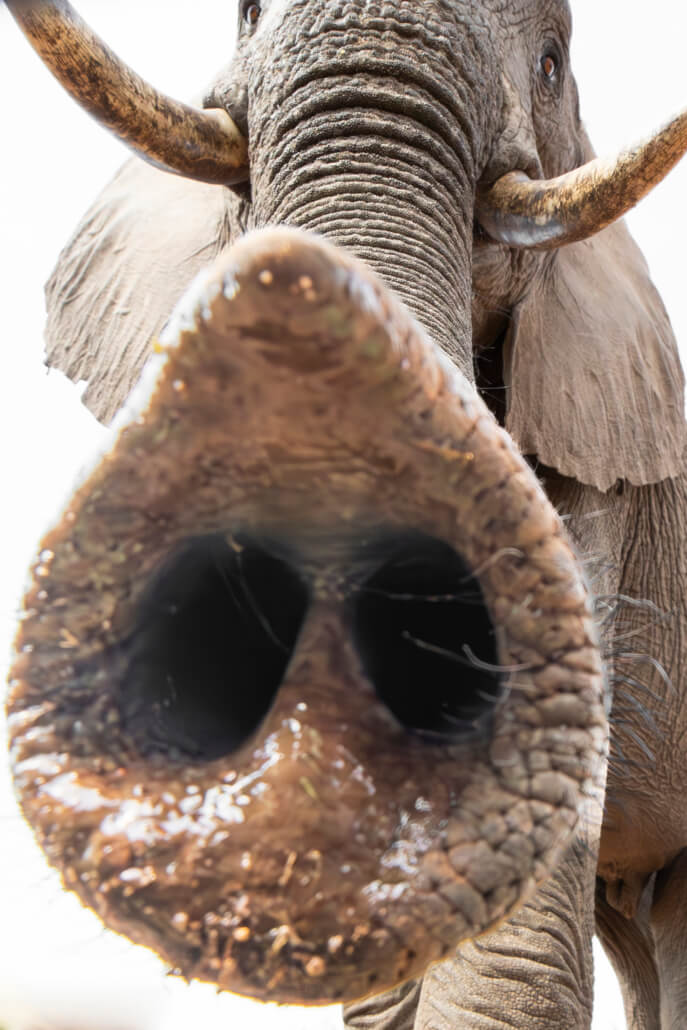
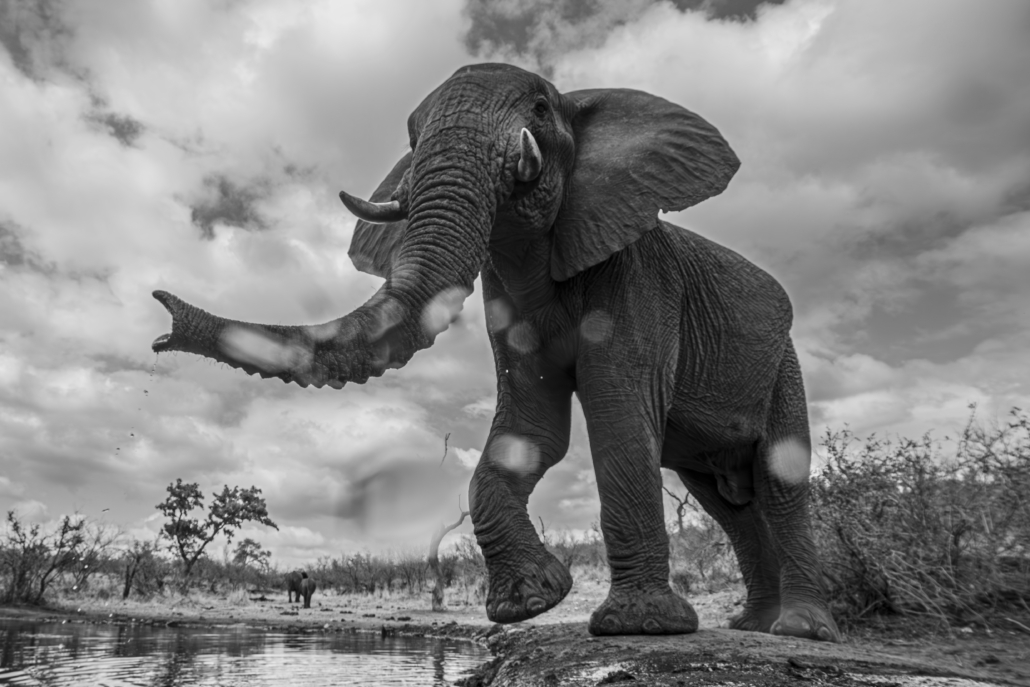
As mentioned previously, I utilize Camtraptions’ camera trap equipment when it comes to sensors, housing and triggers. However, I also make use of housing that was designed by Helgardt Pretorius (Rhulani Productions) which allows me to drive a remote-controlled vehicle or place a large stationary housing at water holes. We call these camera trap setups the Carapace and Armadillo – each designed for different functions and hen using either the Carapace or Armadillo, we remotely trigger the camera shutter using a wireless remote while sitting as far as 50m away. No remote camera sensors are used here, and we must wait until the perfect moment to pull the trigger. Flash systems are used with a wireless trigger – so that when we fire the shutter, the flash is also triggered.
I would strongly advise against using your favorite camera with camera traps, as we have lost a great deal of equipment from camera bodies and lenses to flash speed lights and receivers – carried away by predators or simply crushed. We’ve had our equipment chewed, kicked, stepped on and drenched in a coating of mud so thick it became like cement. My choice for camera trapping is the trusty Canon 5D IV or 1DX II with a Samyang 14mm lens, which can be replaced relatively inexpensively and easily. When designing your own camera trap housing and set-up, I strongly advise you test it out first without any equipment inside and include a tracking device if possible so that you can find it again should it be taken away by an animal – or even wondering human. If you haven’t done so, give camera trapping a go – you just never know what may end up on your sensor!
Thank you for taking the time to read this article. We look forward to sharing many more fascinating facets of wildlife photography with you in future blogs.
Yours sincerely,
Armand Grobler
Director of Rhulani Photo and Film
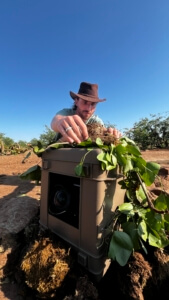
Setting up the Armadillo – scenting it with elephant dung.
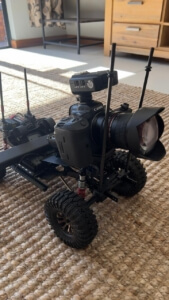
The Carapace (without the carapace!).
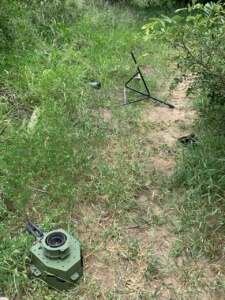
Camptraptions destroyed by elephant.

Broken flash system destroyed by passing elephant.

 Proudly Partnered with South Africa’s Premier Wildlife and Boutique Styled Coffee-Table Book Publishers.
 Armand Grobler